
What had to be solved
The controller had to regulate current through a proportional hydraulic valve and provide predictable control for an external system or operator.
Projects / Industrial automation and embedded control
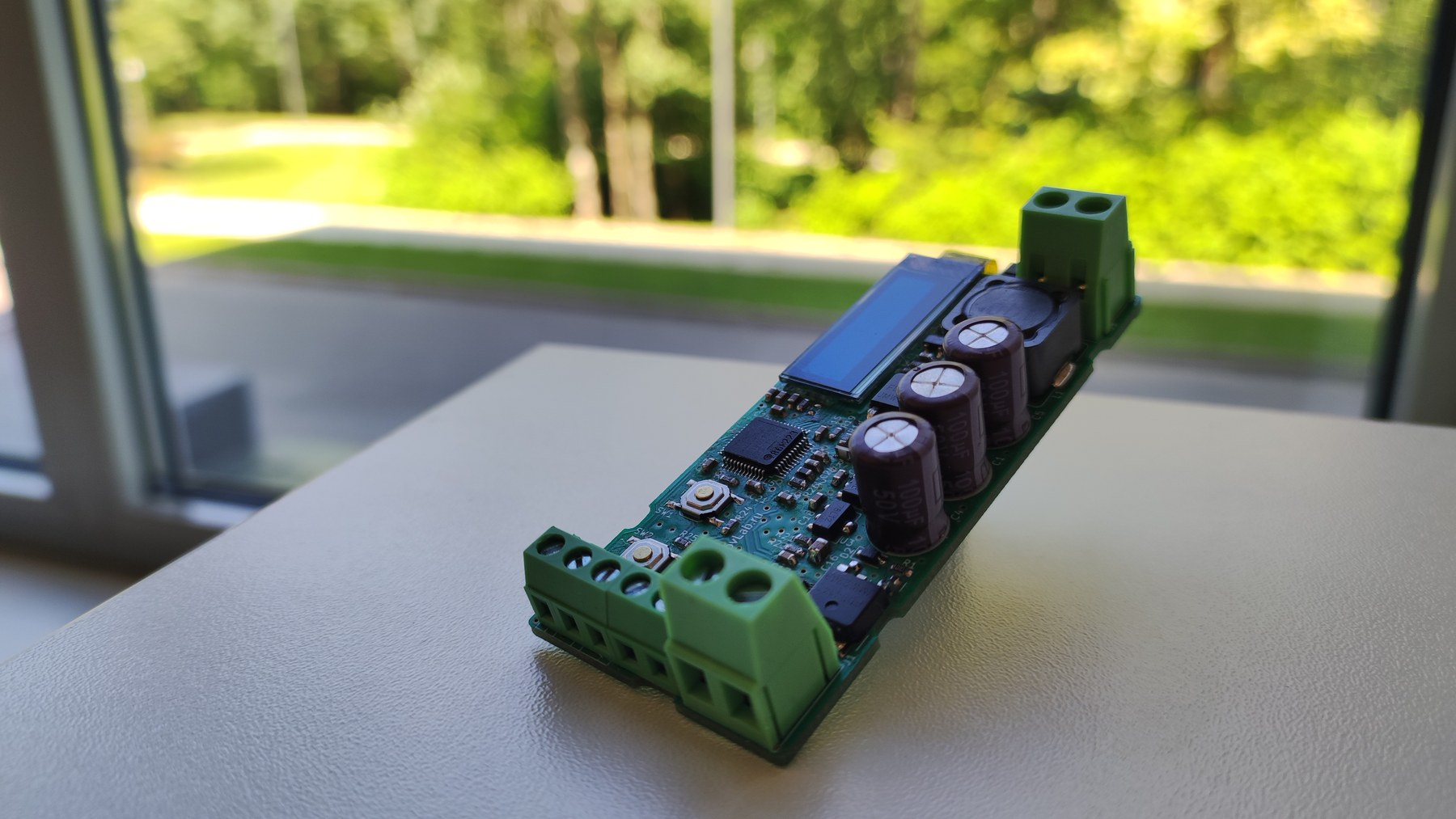
Controller for proportional hydraulic valves with current regulation, protection logic, external control and device documentation.
The controller had to regulate current through a proportional hydraulic valve and provide predictable control for an external system or operator.
A compact controller was prepared with operating modes, external control, protection behavior and documentation.
Project materials
Documentation
Engineering context
The output stage works with an inductive hydraulic valve load.
Current regulation and safe behavior during mode switching were important.
The device needed clear external-control and manual-control options.
Work done
Power-stage and current-measurement circuitry.
Firmware for current regulation and operating modes.
Protection and diagnostics behavior.
PCB design, prototype testing and device manual.
Contact
Contact us by email. We discuss custom electronics and automation tasks remotely with companies, labs, small businesses and individual customers worldwide.