
What had to be solved
The task was to collect parameters from a remote infrastructure object on a regular basis without permanent on-site personnel.
Projects / Measurements, sensors and data acquisition
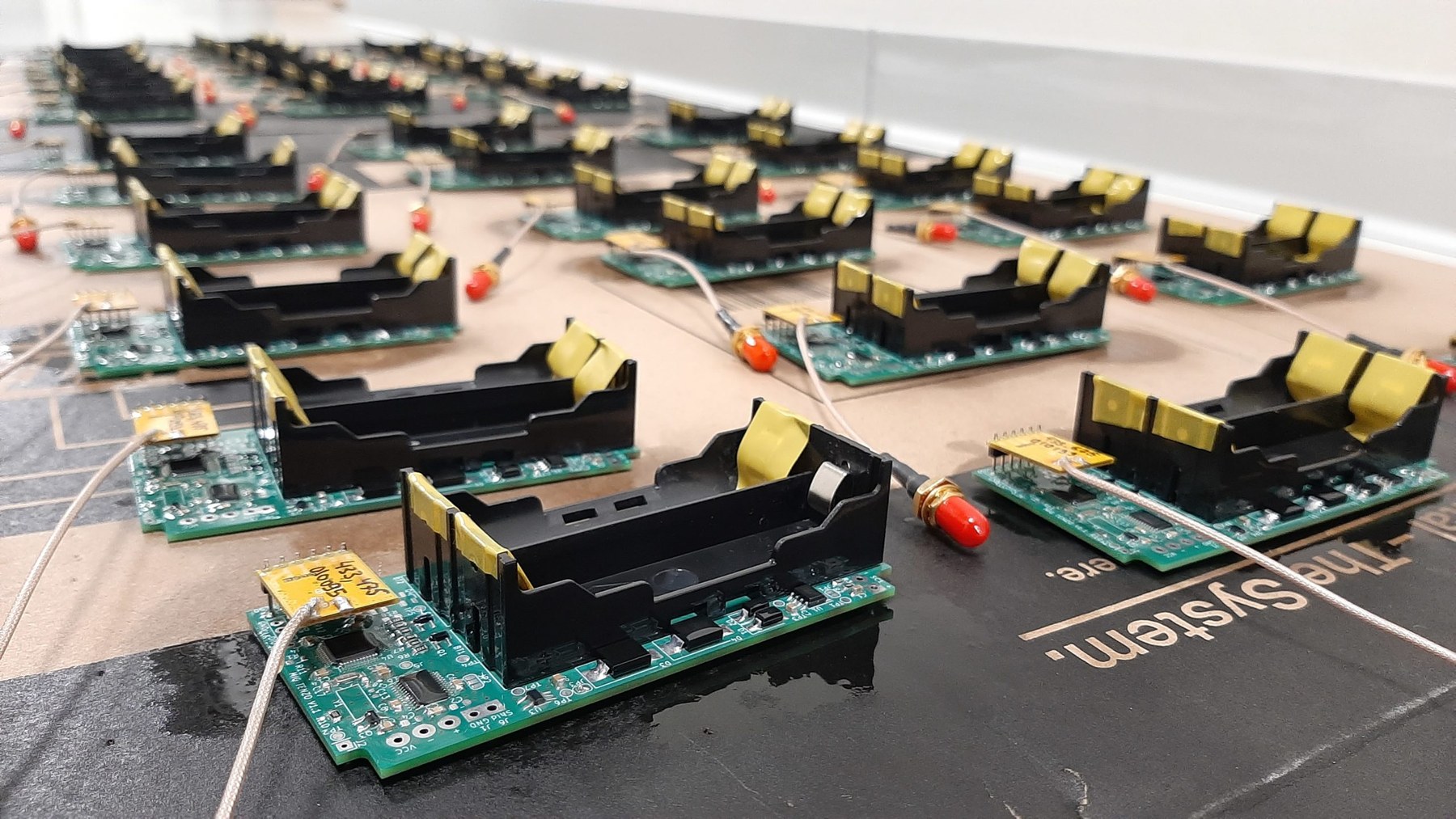
Distributed autonomous monitoring system for remote infrastructure: field sensors, local radio network, gateway, autonomous power and server-side data transfer.
The task was to collect parameters from a remote infrastructure object on a regular basis without permanent on-site personnel.
The project reached a field-system level: several autonomous sensor types, a gateway, firmware, power supply, diagnostics and operating materials.
Project materials
Engineering context
Sensors had to work directly on an infrastructure object.
Long autonomous outdoor operation and a strong electromagnetic environment were important constraints.
The system measured mechanical, temperature, climate and vibration parameters.
Sensor modules had to keep power consumption low between measurement cycles.
Work done
Circuit design for autonomous sensor modules and a field gateway.
Strain-gauge measurement channel with a 24-bit ADC.
Battery and solar-panel power with state diagnostics.
Local radio channel between sensors and the gateway.
Low-power firmware with a sleep-measure-transfer cycle.
Details
The system was built as a network of measurement devices. Sensor modules are installed on the object, operate from their own power sources, transfer measurements to the field gateway and the gateway sends data to the server.
Contact
Contact us by email. We discuss custom electronics and automation tasks remotely with companies, labs, small businesses and individual customers worldwide.